
How to write a rule that never mis-fires

A rule “mis-fires” in one of two ways: it drafts the wrong reply, or it drafts when it should have stayed quiet. Both erode the thing that makes InboxOji useful — the trust that what’s waiting in your drafts is worth sending. The good news: precision is a skill, and the product is built so that getting there is low-risk. Here’s how to write rules that hit the mark.
First, how matching actually works
One idea does all the work, and understanding it is half the battle. A rule is a single situation — a “when this is true” you describe in plain words — paired with the reply you’d send. InboxOji reads each incoming email, decides whether it matches a rule you created, and only then drafts. If nothing matches, it drafts nothing — it won’t jam a square reply into a round email, and it never touches mail you haven’t accounted for.
So a mis-fire isn’t the AI going rogue across your whole inbox. It’s a rule whose definition was fuzzy. Tighten the definition and the mis-fires disappear.
Write a sharp “When this is true…”
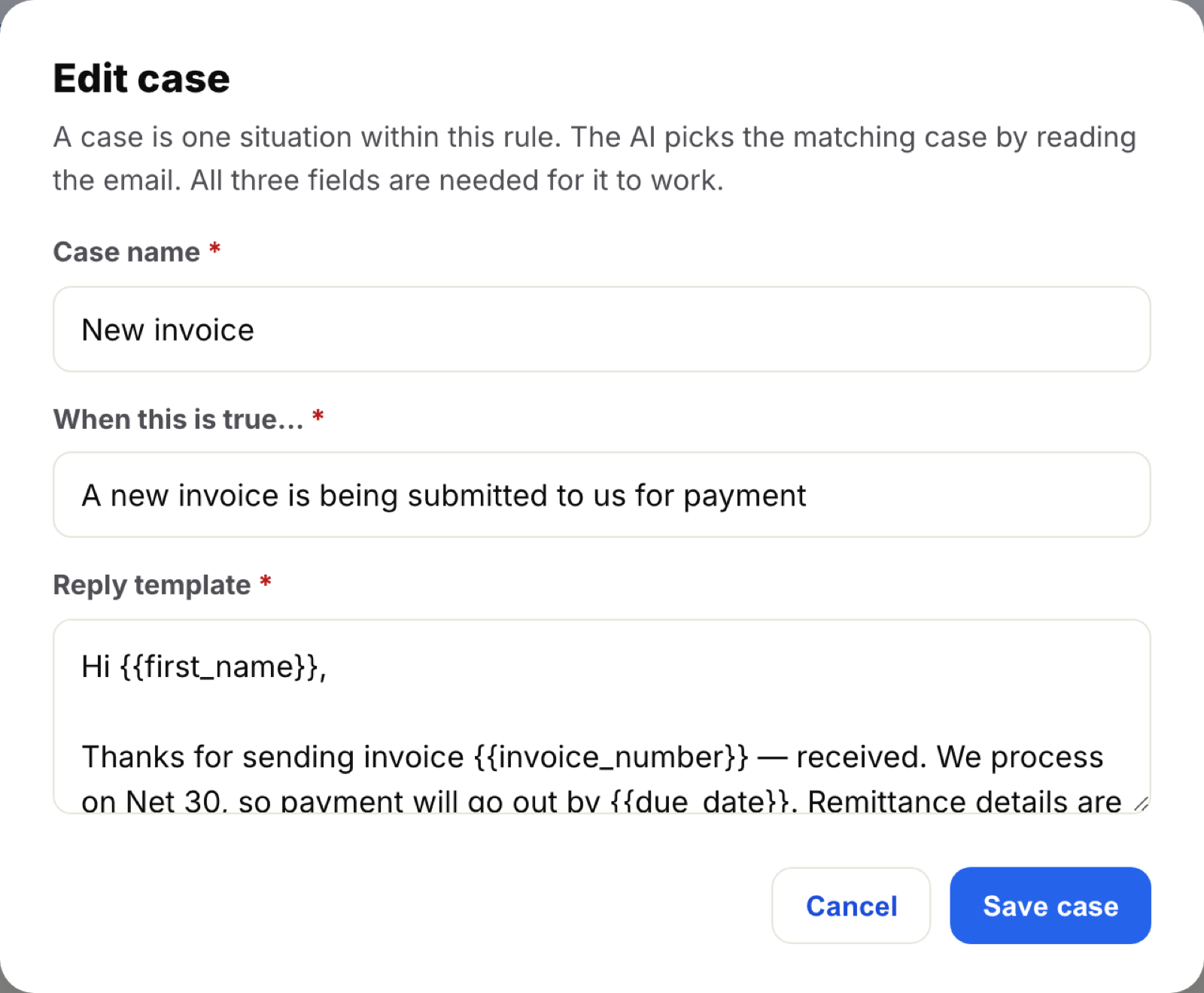
Every rule has a one-line trigger — the “when this is true” — and this single line is where precision lives. Vague triggers overlap and confuse the match; specific ones don’t. When two rules describe nearby situations, keep their triggers mutually exclusive so the AI never has to guess between them.
Describe the sender’s intent, not your reply.
Compare “about invoices” (which rule? both?) with two clean lanes: “A new invoice is being submitted to us for payment” versus “The sender is confirming a previously-issued invoice has now been paid.” The AI can tell those apart every time, because you can.
Give it facts, not guesses
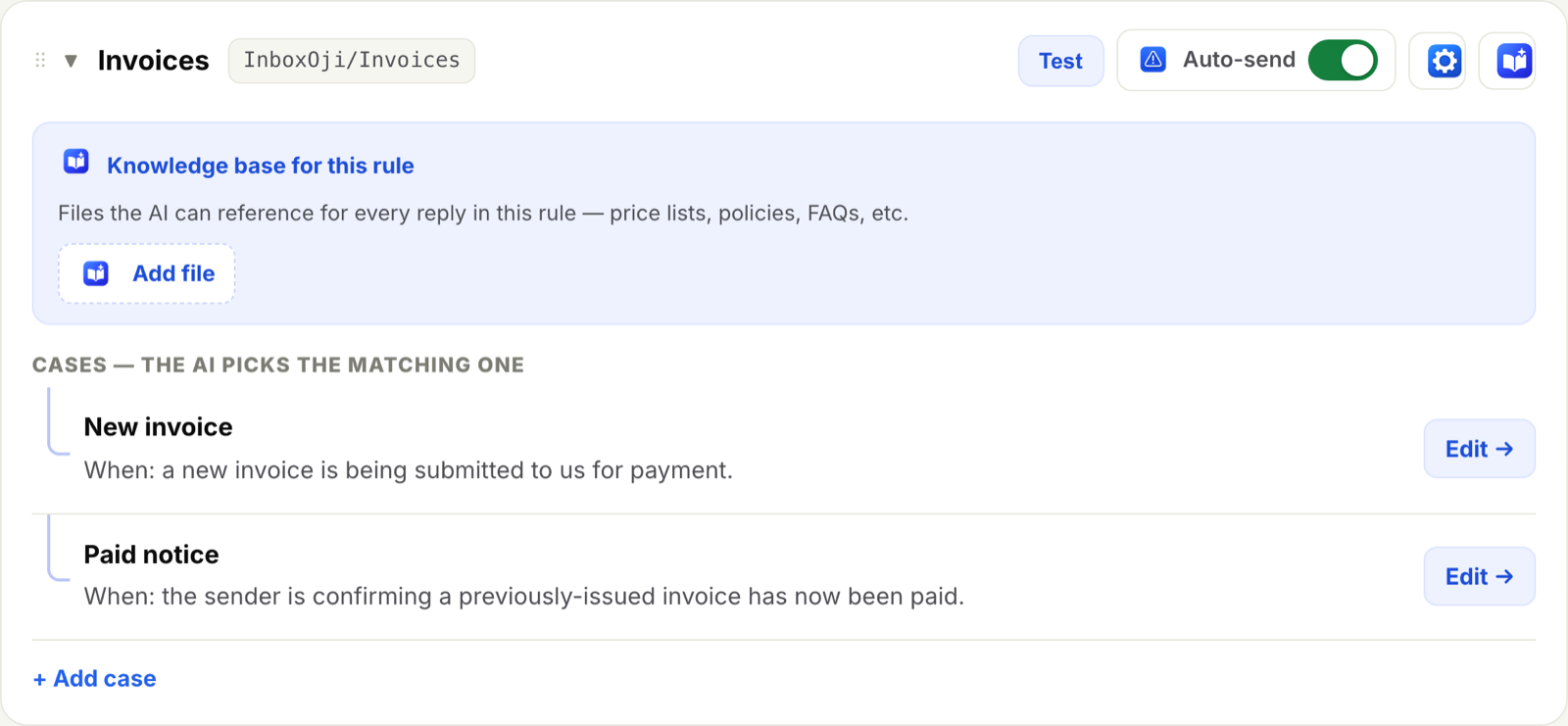
The other source of mis-fires is an invented detail — a made-up price, a wrong link, a date the AI guessed. Don’t leave room for it. Put the specifics that recur into variables like {{booking_link}} or {{due_date}}, and put reference material — price lists, policies, specs — into the rule’s Knowledge base. Now the AI fills replies from your data instead of its imagination.
Test before you trust
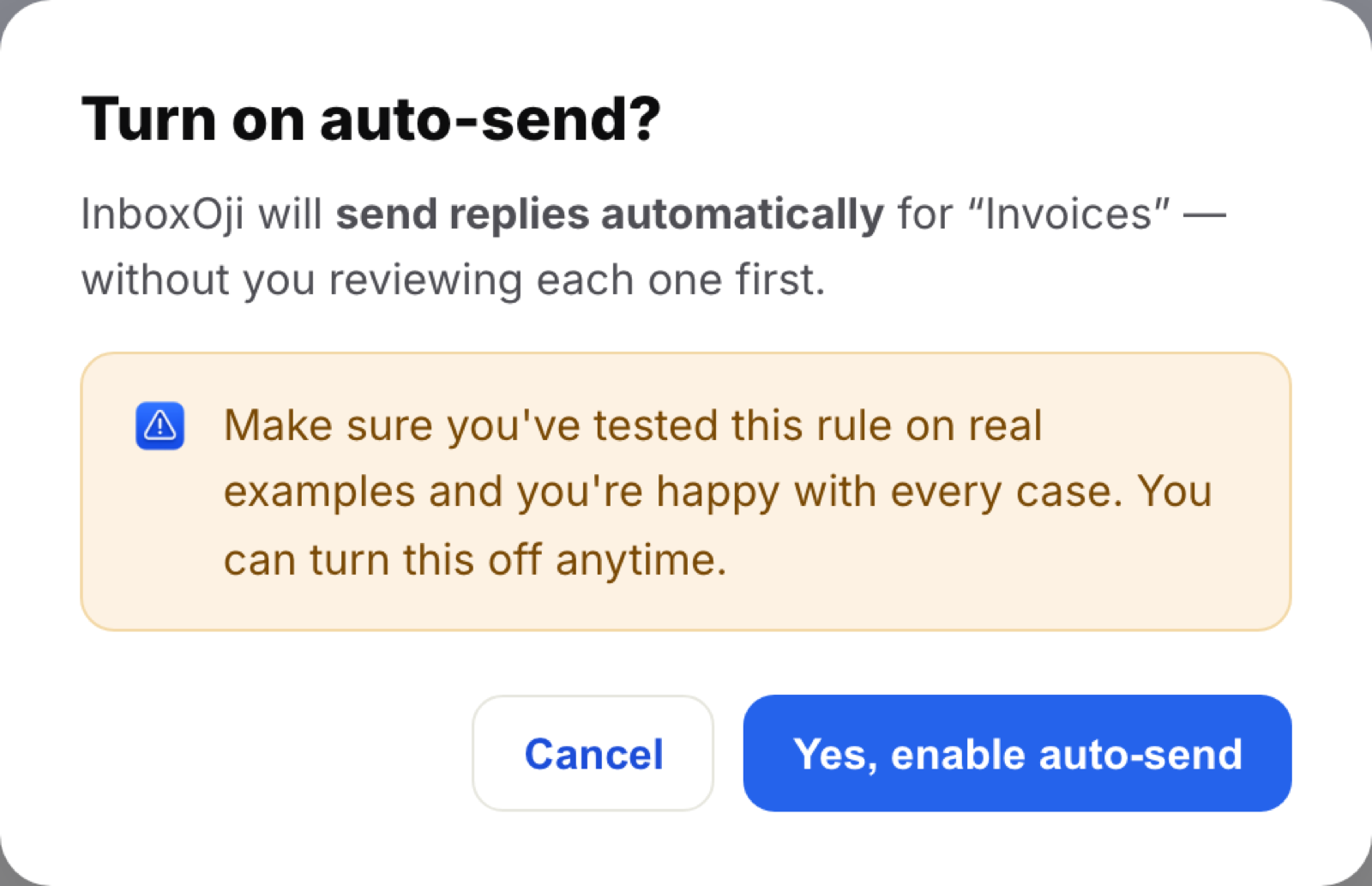
Every rule starts untested and drafts only. Use Test to run it against a real example and read the draft it would write — then adjust the trigger or the template until it’s right. Only once a rule is tested can you enable auto-send, and even then it’s per rule, opt-in, and reversible at any time.
Draft-by-default is your safety net
Here’s the quiet part: a well-written rule rarely mis-fires — but you don’t have to be perfect, because by default InboxOji drafts and waits. A slightly-off draft is a ten-second edit, not an incident. That’s exactly what makes it safe to start before your rules are flawless: the cost of imperfection is your review, which you were going to do anyway.
Refine with the misses
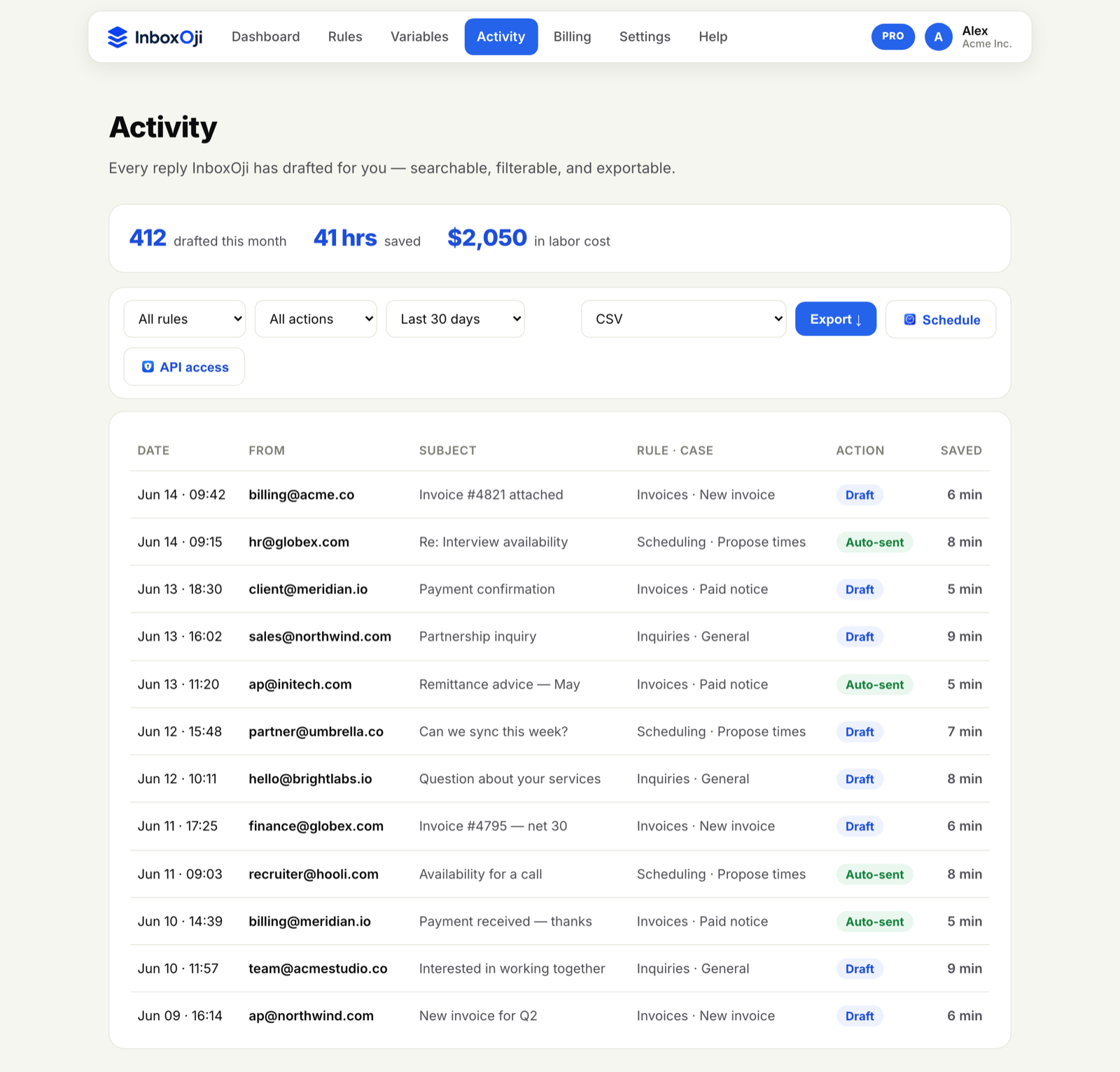
Your Activity log records two things worth watching: every draft InboxOji wrote, and every time an email looked relevant but no rule fit. That second signal is gold — it’s the product telling you precisely where to add a rule. Add it, and that gap closes.
Do this and “mis-fire” stops being a word you use. The rules get sharp, the drafts get boring in the best way, and one day you’ll trust a handful of them enough to let them send on their own.
Stop rewriting the same email
InboxOji drafts your repetitive replies in your voice — you decide what sends. Free to try.
Try InboxOji free